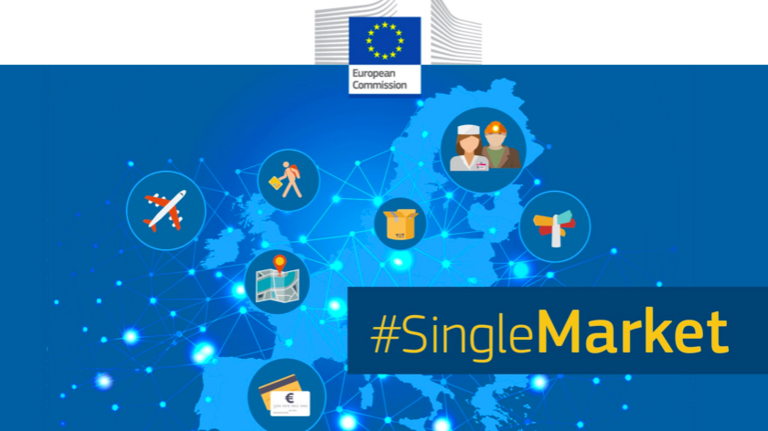
The Single Market has been around for decades, and has supported much growth and development in the UK, by focussing on the promotion of the 'Four Freedoms'.
Through consensus from member states of the EU, the Commission has worked to harmonise regulation of goods across the trading bloc. Working in close cooperation with the Customs Union, the Freedom of Goods has given businesses in the UK the opportunity to import and export goods without border taxes and with minimal red-tape. Since leaving the EU, goods have been more difficult to ship to and from the EU, leading to the farming and logistics industries, in particular, suffering.
As the role that services play in European economies has grown, so has the EU's interest in promoting services-based industries. One of the ways they have done that through the Single Market is by ensuring the Freedom of Services, for instance through the Freedom of Establishment (a UK service-provider can provide the service anywhere in the EU). Since leaving the EU, many service providers have found their ability to work on the continent to have been massively hindered, sometimes even banned. Internet providers and the financial services industry have been particularly hit by this.
To be able to freely move capital (cash and other financial items) is a privilege that helps economies grow. Whilst the EU's global openness means that capitla movement will largely still be doable, the key benefit of Single Market membership regarding capital movement is that Foreign Direct Investment (FDI) between Single Market countries faces less red-tape and thus, countries see more investment. Since leaving the EU, FDI towards the UK has taken a hit, damaging industries across the board
The last of the Four Freedoms, involves giving EU citizens the right to move, live and work in other member states without discrimination. In the EU, this has allowed many industries to flourish: our NHS and farming industries, as well as hospitality and administrative services, all have historically survived and developed as a result of the EU workforce. In the other direction, Freedom of Persons has consistently given opportunities for Brits to travel and live in the whole of the Single Market without restriction, as well as the opportunity to seek out better paid, better suited roles across the continent. Since leaving the EU, not only have businesses suffered due to a lack of workforce, but individuals have been directly hurt too, with many in the creative arts industries not being able to find previously-available work, and many others now being restricted in holidays, business travel or seeing their families.